Unleashing Opportunities: How Montessori Methods Reshape Learning for Every Child
Montessori methods offer a novel approach to education that emphasizes autonomy, inquisitiveness, and critical thinking. By creating learning environments and utilizing tactile resources, these methods cater to multiple learning modalities. Age-mixed classrooms foster collaboration and give children the ability to move ahead at their own pace. This holistic approach not only enhances academic skills but moreover supports personal growth. What ramifications does this bear upon for the future of education? Exploring these matters reveals significant understanding.
The Central Values of the Montessori Teaching Method
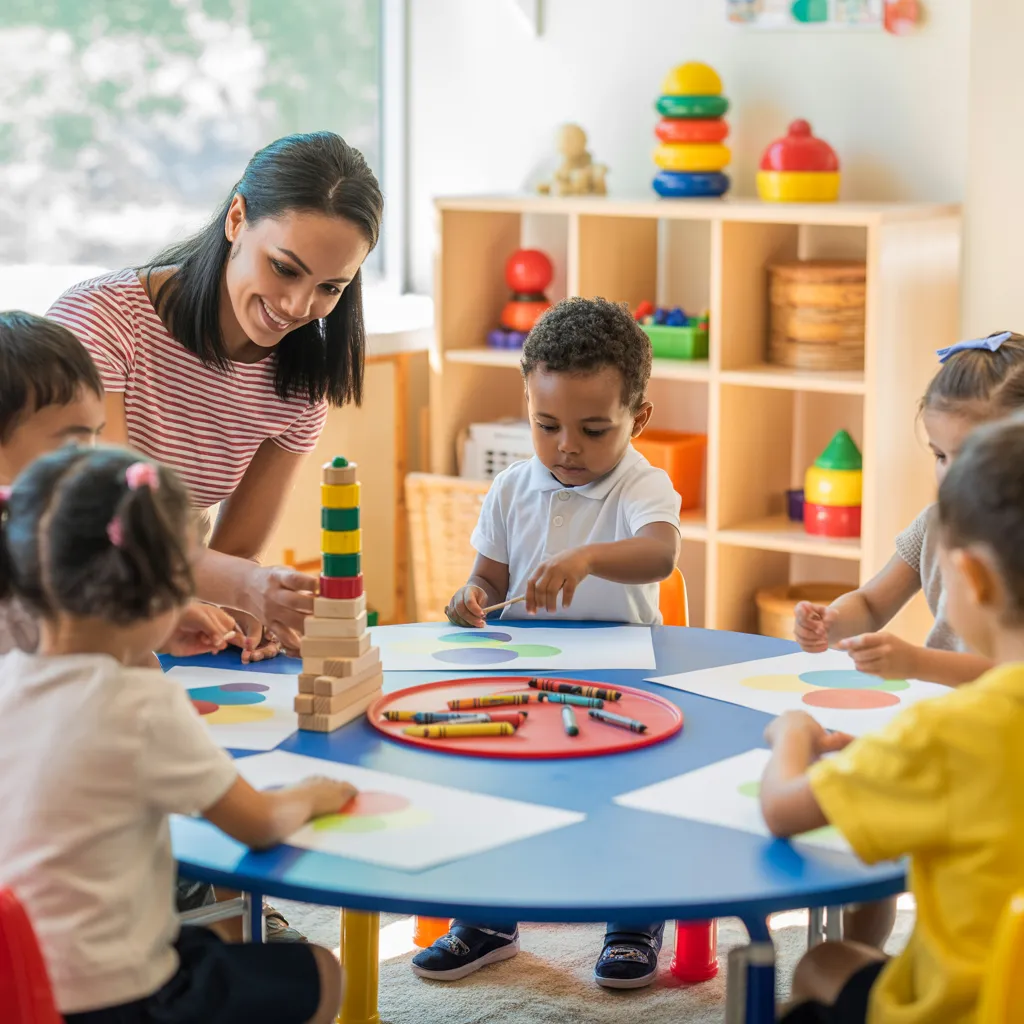
Montessori education is founded upon several core principles that direct its learning approach. At the heart of this philosophy lies the assumption in each child's innate potential, with an emphasis on respecting their individual pace of development. The prepared environment is fundamental, being constructed to encourage exploration and self-directed activity. The materials are intentionally picked to be stimulating and developmentally suitable, allowing children to learn through hands-on experiences. Furthermore, the Montessori method supports a mixed-age classroom setting that encourages collaboration and peer learning. Teachers serve as guides rather than conventional instructors, facilitating learning while observing and supporting each child's distinct journey. This holistic approach nurtures not only cognitive skills but also social and emotional growth, encouraging a lifelong passion for learning. Through these principles, Montessori education seeks to develop independent, confident learners equipped to engage with the world around them.
Montessori Approach Builds Independence in Students
Montessori education distinctively fosters independence in children through autonomous learning, enabling them to control their educational journey. By emphasizing practical life skills, children gain confidence in their abilities to manage everyday tasks. Furthermore, the ability to choose prompts them to make decisions, further boosting their autonomy and self-reliance.
Fostering Self-Guided Learning
Fostering independence in children, the Montessori approach highlights autonomous learning as a fundamental tenet. This method encourages children to take charge of their educational journey, allowing them to choose activities that match their interests and developmental stages. By providing a prepared environment filled with materials, educators facilitate exploration and discovery, enabling students to pursue knowledge at their own pace. This autonomy not only fosters critical thinking and problem-solving skills but also nurtures a sense of responsibility. As children engage in self-directed tasks, they develop confidence in their abilities, boosting their intrinsic motivation. Ultimately, this approach cultivates lifelong learners armed with the skills necessary to navigate an ever-changing world, laying a strong foundation for future educational endeavors.
Useful Life Competencies
Helping children to acquire practical life skills is essential in Montessori education. By engaging in hands-on activities, kids acquire essential skills like pouring, sweeping, and dressing that encourage independence and read the facts confidence. These activities are designed to be age-appropriate, allowing kids to engage at their own pace. Through the practice of real-life skills, they enhance fine motor coordination and cognitive skills, boosting their sense of accomplishment. Moreover, stressing responsibility promotes their relationship with their environment and community. As children navigate these tasks, they gain problem-solving skills and an understanding of the consequences of their actions. Ultimately, practical life skills not only prepare children for daily living but also ignite a lifelong love for learning and self-sufficiency.
Freedom of Choice
Children who take part in real-world competencies build a robust framework for self-reliance, which is amplified by the freedom of choice fundamental to Montessori education. This method permits children to pick tasks that resonate with their interests and developmental needs, cultivating a feeling of responsibility over their learning. By making choices, they master the skill of determine their preferences, handle time, and strengthen ability to solve problems. This autonomy encourages internal motivation and belief in themselves, as children navigate their learning path at their personal speed. Moreover, the environment is intentionally arranged to enable these choices, with materials available and appealing. As an result, children in Montessori classrooms not only cultivate independence but also develop a enduring enthusiasm for discovery through inquiry and investigation.
The Way Interactive Learning Sparks Curiosity
Hands-on learning acts as a catalyst for inquisitiveness in children by activating their senses and encouraging active participation. This approach advances independent exploration, permitting students to discover concepts through their own experiences. Additionally, it cultivates creative solution-finding capabilities, empowering learners to navigate challenges in novel ways.
Enticing With Sensory Experiences
Numerous research studies stress the significant effect of tactile engagement in primary learning, illustrating how tactile interactions can ignite fascination. In Montessori classrooms, children engage with materials that stimulate their senses, fostering exploration and education through touch, sight, sound, and movement. For instance, employing sandpaper letters enables students to feel the shapes of letters while simultaneously gaining to identify them. This multisensory method not only strengthens cognitive development but also fosters emotional bonds to the learning process. As children manipulate various objects, they develop fine motor skills and spatial awareness, vital for later academic success. In conclusion, sensory experiences build a rich, engaging environment that nurtures curious minds, making learning a dynamic and enjoyable journey.
Encouraging Self-Sufficient Exploration
Building upon the importance of sensory experiences, enabling independent exploration naturally complements Montessori principles. Under this approach, children are motivated to interact with their environment freely, allowing them to chase their curiosities and questions. Hands-on learning activities afford opportunities for students to handle materials and discover concepts at their own pace. This autonomy not only encourages curiosity but also enhances confidence, as children learn to trust their intuition and make decisions. By crafting an environment rich in materials and tools, educators support this exploration, directing children to pursue their natural inquisitiveness. Ultimately, enabling independent exploration fosters a lifelong love of learning, empowering children to seek knowledge beyond the classroom.
Fostering Imaginative Problem-Solving
Interacting with tactile materials sparks children's creative minds and promotes creative problem-solving. In Montessori environments, direct learning experiences allow children to explore concepts through active engagement. This approach nurtures curiosity, enabling learners to experiment and refine on their concepts. When encountering challenges, children learn to develop multiple solutions, strengthening their analytical skills.
The application of hands-on materials, such as building blocks or art supplies, promotes exploration and risk-taking in a secure environment. Children are motivated to inquire and find solutions on their own, cultivating strength and adaptability. This method nurtures not only scholarly abilities but also social-emotional development, as children collaborate and share insights. Ultimately, Montessori techniques revolutionize traditional education by empowering students to become creative solution-finders.
How Montessori Techniques Elevate Academic Achievement
Montessori approaches foster a distinctive educational setting that enhances academic success by encouraging self-directed exploration and critical thinking. In this approach, learners engage with tactile resources that cater to various learning styles, promoting more comprehensive comprehension of ideas. The emphasis on individualized learning enables children to advance at their own pace, cultivating a feeling of responsibility over their education.
In addition, the heterogeneous groupings facilitate peer learning, where younger students can learn beside older peers, anchoring knowledge through teaching. This collaborative atmosphere develops communication skills and inspires a love for learning. Teachers function as coaches rather than traditional instructors, spurring inquiry and exploration.
Assessment in Montessori settings focuses on mastery rather than marks, assisting students develop internal drive. As a result, children often display improved academic resilience, contributing to enhanced performance in standardized assessments. Overall, Montessori methods establish a solid foundation for continuous education and academic achievement.
Fundamental Life Competencies Created Via Montessori Instruction
Promoting self-direction and accountability, Montessori education builds important practical knowledge that surpass academic knowledge. This approach motivates children to be self-directed and make choices, establishing judgment skills necessary for prospective accomplishment. By undertaking hands-on activities, students strengthen innovative thinking and learn to manage time effectively. The stress placed on collaboration within multigenerational learning spaces also nurtures relational abilities, conveying to children kindness and appreciation for different perspectives.
Additionally, Montessori instruction promotes self-discipline via structured routines, assisting children understand the consequences of their actions. Practical hands-on experiences, including preparing food and plant cultivation, instill a feeling of accountability and concern for their surroundings. These experiences not only improve motor skills but also strengthen confidence and resilience. At the end of the day, the practical abilities obtained through Montessori schooling empower children to navigate obstacles and adapt to new situations, preparing them for a satisfying future.
Personalizing Montessori Schooling to Assorted Student Learning Methods
Tailoring teaching approaches to meet diverse learning styles enables a more inclusive and effective learning environment. Montessori education is inherently responsive, recognizing that children learn in various ways—visually, auditorily, and kinesthetically. Using hands-on activities and materials, students engage with concepts in a manner that suits their individual preferences.
Teachers carefully observe each child, recognizing unique strengths and challenges. This assessment informs customized learning plans that align with each learner's preference, promoting greater comprehension and memory. For instance, a child who thrives in spatial reasoning may benefit from manipulating geometric shapes, while another might flourish through storytelling.
This versatility encourages a sense of autonomy, prompting students to take charge of their learning journey. By acknowledging and adapting to diverse learning styles, Montessori education not only boosts academic achievement but also nurtures a love for learning that extends beyond the classroom.
Preparing for Sustained Achievement: The Montessori Benefit
An education that respects diverse learning preferences lays a solid base for enduring achievement. The Montessori method highlights independent study, allowing children to explore their passions at their own speed. This approach develops critical thinking and problem-solving skills, crucial attributes in an ever-changing world. By fostering self-reliance, students discover to take responsibility for their education, preparing them for upcoming obstacles.
Additionally, the mixed-age classroom venue encourages collaboration and learning from peers, enhancing social skills and emotional intelligence. Children develop respect for multiple viewpoints, which is vital for success in cross-cultural situations. The priority on experiential, practical engagement further outfits students with applicable abilities relevant beyond the classroom.
Ultimately, the Montessori strength can be found in its holistic philosophy, encouraging not only academic excellence but also personal growth. This comprehensive educational approach prepares children to navigate life's difficulties, ensuring they possess the tools necessary for sustained success.

Frequently Asked Queries
What Age Groups Benefit Most From Montessori Education?
Children aged 3 to 6 years experience the greatest benefits from Montessori education, as this stage nurtures independence and self-directed learning. However, older age groups, including elementary students, also obtain valuable skills through the Montessori approach.
What Methods Does Montessori Education Use to Accommodate Children With Special Needs?
Montessori programs support children with special needs by offering personalized educational instruction, fostering independence, and permitting flexibility in pace. This customized method allows diverse learners to flourish in a caring and encouraging setting, highlighting their distinctive abilities.
Is Attending Montessori Schools More Costly Than Attending Traditional Schools?
Montessori schools frequently charge higher tuition in comparison to traditional schools, primarily due to smaller class sizes, unique instructional resources, and one-on-one teaching. However, costs can vary considerably according to location and specific program offerings.
What Qualifications Do Montessori Teachers Require?
Montessori educators typically must have a baccalaureate degree and intensive preparation in Montessori methods, which includes both foundational learning and practical experience. Certification status from respected Montessori institutions is often essential for teaching in certified schools.
How Might Parents Facilitate Montessori Concepts Within the Home?
Parents can encourage Montessori principles at home by setting up a well-arranged area, promoting self-direction, giving options, promoting investigation, and emphasizing practical learning. Having exploratory dialogue also enhances critical thinking and fosters a kid's inherent desire to explore.